Key Takeaways
- Check locks, arms, cables and hydraulic leaks every day before use.
- Monthly: lubricate, check cable tension and re-torque anchors.
- Annually: have a qualified inspector examine and document the lift.
- Remove a lift from service immediately if any safety device fails.
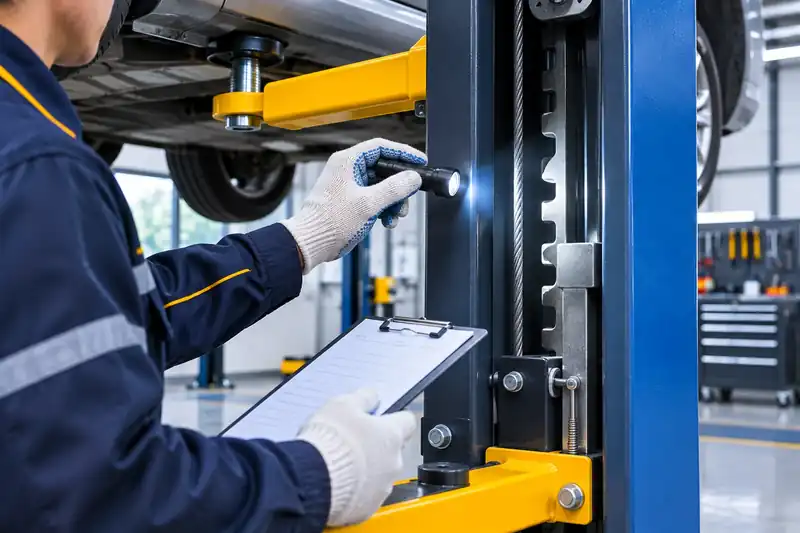
Lift safety depends on simple checks done every day. Print this list and keep it next to each lift.
Daily — before the first lift
- Safety locks engage audibly at every position on every column
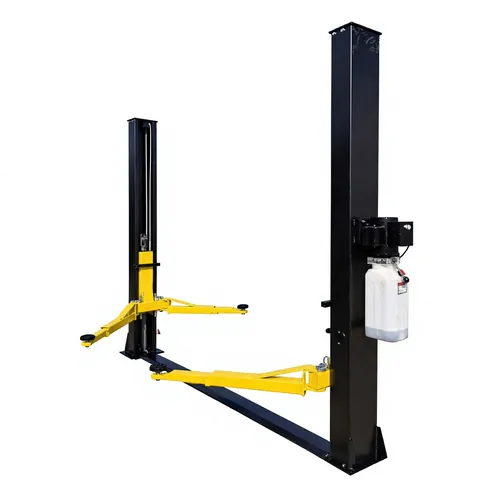
- Arm restraints (two post) lock and release correctly
- Lifting pads and adaptors are undamaged and present
- No hydraulic oil on the floor, hoses or fittings
- Equaliser cables and lifting chains are free of kinks and broken strands
- Controls and lock release work; emergency stop works (where fitted)
- The area under and around the lift is clear
Monthly
- Lubricate carriage slides, pulleys and lock mechanisms
- Check equaliser cable tension so both carriages lock at the same height
- Re-torque anchor bolts to the value in the manual
- Check hydraulic oil level with the lift fully lowered
- Inspect electrical cables and the power unit for damage
Annually
Have a qualified lift inspector examine structure, welds, anchoring, hydraulics, safety devices and labels, and keep the written report. Replace worn slider blocks, seals and cables as needed.
Remove from service if
- A lock fails to engage
- Hydraulic pressure is lost or the lift drifts down
- A structural part is bent, cracked or corroded
- Cables are damaged or the carriages are out of level
We supply spare parts — seals, cables, locks, slider blocks and power unit components — for every lift we sell. Ask for a spare parts list for your model.
FAQ
How often should a car lift be inspected?
Operators should check the lift daily before use, carry out maintenance monthly, and have a qualified inspector examine it at least once a year.
When should equaliser cables be replaced?
Replace cables showing broken wires, kinks, corrosion or flattening — and always replace them as a pair.